
Ever feel like healthy eating just seems too tricky? A balanced diet chart makes things easy by splitting your meals into six simple food groups: grains, veggies, fruits, proteins, dairy, and fats. Each one helps give your body the strength and energy it needs.
This straightforward checklist turns meal planning into a simple daily habit. Try filling your plate with these portions, and you'll start feeling more energetic and upbeat all day. Stick with it, and you might just notice a happier, healthier you.
Balanced Diet Chart: Bright Eating, Happy Life
This balanced diet chart is a simple guide that shows you how to divide your meals into easy servings from different food groups. It covers six groups, grains, vegetables, fruits, proteins, dairy, and fats, to give your body the energy it needs to stay strong and healthy. Think of it as your everyday roadmap for meals, where each portion plays a part in keeping your body balanced.
The chart works like a checklist that helps you remember what to include in every meal. If you're curious about the basics of balanced eating, check out this explanation on "what is a balanced diet" (https://siluk.net?p=).
| Food Group | Example Portion (2,000-Calorie Diet) |
|---|---|
| Grains | 6 servings, like one slice of bread or 1/2 cup of cooked rice |
| Vegetables | 3 servings, such as 1 cup raw leafy greens or 1/2 cup cooked veggies |
| Fruits | 2 servings, for example one small apple or a half-cup of berries |
| Proteins | 5 servings, like 3 oz of lean meat or 1/4 cup beans |
| Dairy | 2 servings, for instance one cup of milk or yogurt |
| Fats | 2 servings, such as one teaspoon of healthy oils |
Use this table daily to plan meals that keep you on track. When you design each meal around these food groups, it becomes easier to meet your nutrient goals while keeping an eye on your calories. For extra ideas on how to mix and match these food elements throughout your day, take a look at our "tips for balanced diet" (https://siluk.net?p=).
Balanced Diet Chart: Food Groups and Portion Sizes

Grains and vegetables build a solid base for a healthy meal. Imagine one slice of bread or a half cup of rice as a serving of grains, about the size of a small bowl. Vegetables should take up about a cup, like a mix of crunchy raw greens or half a cup of steamed carrots that brighten your plate. Sometimes, people think these portions are too small, but in many cultures, meals come with larger servings. Using images like a cupped hand to show one cup of veggies can make these ideas more familiar.
Fruits, proteins, dairy, and fats add specific benefits to your meal. A small apple or half a cup of sliced berries brings a refreshing burst of flavor. Think of proteins as a palm-sized piece of meat or a hearty handful of beans that help your muscles recover. Dairy, like a cup of milk or yogurt, works to keep your bones strong. And a thumb-sized amount of healthy fat, such as a few slices of avocado, supports clear thinking. These simple visuals make it easier to plan balanced meals without confusion.
Try these simple measures:
- Palm-sized portion for proteins.
- Fist-sized portion for carbohydrates.
- Thumb-sized serving for fats.
- Cup-sized measure for fruits.
- Handful for vegetables.
- Bowl-sized serving for grains.
Picture a food pyramid where grains and vegetables form a wide base, holding smaller servings of fruits, proteins, dairy, and fats at the top. This clear layout gives you a natural guide to mix these groups into a well-rounded, nutrient-rich meal.
Balanced Diet Chart: Sample Weekly Schedule
This weekly plan shows a simple way to enjoy three meals and two snacks every day. It’s a friendly guide to help you stay energized and feel good throughout the day. Each day welcomes you with a tasty breakfast, a hearty lunch, and a dinner that rounds out your day nicely. For snacks, try a piece of fruit, some crunchy vegetables, or a bit of healthy fat from sources like avocado or nuts.
| Day | Breakfast | Lunch | Dinner | Snacks |
|---|---|---|---|---|
| Monday | Oatmeal with berries | Grilled chicken salad | Quinoa stir-fry | Apple & almonds |
| Tuesday | Whole grain toast & egg | Veggie wrap | Salmon with veggies | Carrot sticks |
| Wednesday | Smoothie bowl | Turkey sandwich | Stir-fried tofu | Yogurt |
| Thursday | Fruit parfait | Black bean soup | Baked fish & rice | Nuts & seeds |
| Friday | Pancakes with fruit | Caesar salad | Veggie pasta | Banana |
| Saturday | Scrambled eggs & toast | Chicken wrap | Beef stew | Mixed berries |
| Sunday | Granola with milk | Quinoa salad | Veggie burger | Sliced cucumbers |
• Pick recipes that combine different food groups
• Choose simple ingredients for quick and easy preparation
• Use handy visuals to help with your portion sizes
• Explore new flavors while keeping your meals balanced
• Try different recipe twists on weekends to keep things interesting
Balanced Diet Chart: Macronutrient and Calorie Breakdown
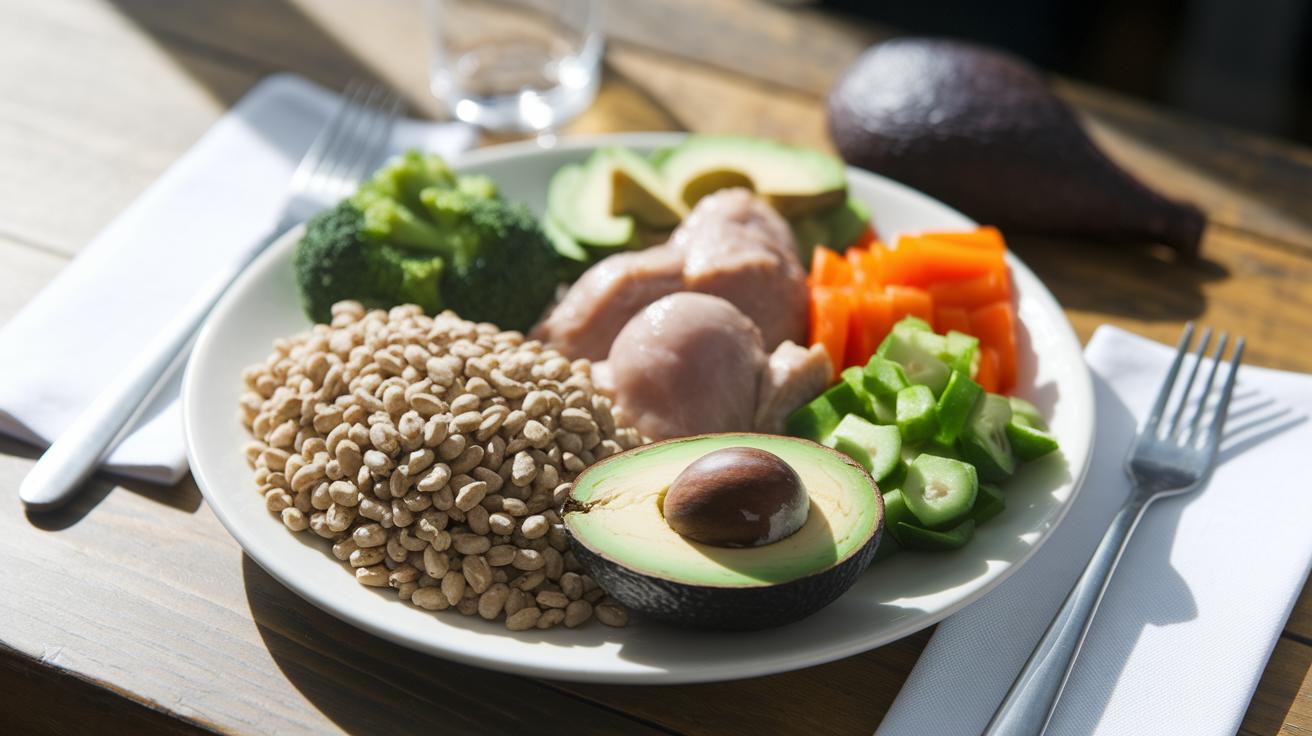
A balanced meal plan usually splits your calories into roughly 50% from carbs, 25% from fats, and 25% from proteins. This mix helps keep your energy steady, repairs your muscles, and supports overall wellness. Carbs give you the fuel for daily activities, fats help your brain work well, and proteins build and fix your body tissues. When you plan your meals for the week, these portions serve as a handy guide to keep your diet on track.
Follow these steps to figure out your own calorie needs:
- Start by finding your Basal Metabolic Rate (BMR), which is the number of calories your body needs when at rest, using a simple formula.
- Add in the calories you burn through exercise and regular activities throughout the day.
- Think about your goal, if you want to gain or lose weight, and adjust your calorie intake accordingly.
- Multiply your daily total by seven to figure out your weekly calorie needs and arrange your meals to cover each food group.
Once you know your calorie needs, fit these percentages into your weekly plan. Planning your meals around these targets helps you focus on getting the right carbs, proteins, and fats at each meal. Using the balanced diet chart as your guide means you can easily adjust your meals on busy days while sticking to your nutrient goals. This simple routine nurtures both your body and mind.
| Meal | Carbs | Fats | Proteins |
|---|---|---|---|
| Breakfast | 50% | 25% | 25% |
| Lunch | 50% | 25% | 25% |
| Dinner | 50% | 25% | 25% |
Balanced Diet Chart: Adapting for Personal Needs
You can change your balanced diet plan to fit your own needs. The size of your portions and the mix of foods can be different if you’re a kid, an adult, or a senior. For example, kids often need smaller, more frequent meals to help them grow, while adults usually do well with steady servings. Seniors might find it easier to digest foods that are packed with nutrients. How active you are can also change the amount of grains, proteins, and fats you should eat each day.
Adjusting for Weight Loss or Gain
If you’re aiming to lose weight, try slightly cutting back on your portions so you eat fewer calories. If you need to gain some weight, you might boost your portions instead. Even a small change in how much you eat can shift your energy balance over time.
Modifying for Sports and Fitness
If you’re into sports or staying active, your body might need extra protein to help repair muscles and more carbohydrates to keep your energy up during workouts. It helps to tweak your plate by adding a little extra protein and carbs to support your fitness goals.
- Use measuring cups or a scale to get your portions just right.
- Draw a simple diagram of your diet to see how much each food group you’re including.
- Check off items on a personal nutrient list every day to stay on track.
Balanced Diet Chart: Tips, Tools, and Resources

Getting your meals organized can make healthy eating a lot easier. When you plan your meals for the week, you remove the guesswork. This simple plan not only saves time but also helps you track what you eat every day. A weekly menu planner can guide you to mix up your meals, while a diet log can help you watch your portion sizes and nutritional choices.
Try these ideas:
- Choose recipes that mix different food groups for balanced meals.
- Set a specific time each week to plan your meals and make your shopping list.
- Prep ingredients in batches, like chopping veggies or cooking grains, to shorten your cooking time during the week.
- Have fun mixing different flavors and spices to keep your meals interesting.
- Use a diet log to write down what you eat every day and see where you might need more nutrients.
- Create a visual plate with all food groups to check if you’re getting a bit of everything.
Taking a moment after each meal to review your nutrient checklist can make sure every meal has the right balance. A quick check helps keep you on track without much effort. This approach turns healthy eating into a simple and enjoyable part of your day, making your balanced diet chart a friendly guide for joyful, nutritious living.
Final Words
In the action, we explored a balanced diet chart that breaks down food groups, portion sizes, and daily meals. The post offered a clear table, a sample weekly schedule, and steps to fit macronutrient ratios into everyday plans. We also looked at how to make adaptations for personal needs. Each section aimed to give simple and useful tips for keeping a steady eating routine. Stay positive and use the balanced diet chart to guide your meal planning and enjoy a healthier lifestyle.