
Do you ever feel like time is slipping away too quickly? A mindfulness journal might be just the tool you need. Imagine writing down your thoughts and feelings so you can see them clearly. Studies for over 30 years have found that writing can clear your mind and relax your body. In this article, we'll show you how a simple journal can help you understand your emotions, ease stress, and stay focused. It might just bring a bit of calm to your busy life.
mindfulness journal: Peaceful Reflections

Have you ever wished you could pause and really capture your thoughts and feelings during a busy day? A mindfulness journal might be just what you need. It’s like a simple diary where you jot down moments that keep you grounded, maybe the smile you shared at lunch or a deep, calming breath during a hectic afternoon.
For over 30 years, research has shown that writing in a journal like this can boost brain function, clear your thoughts, and even aid in healing. Keeping a mindfulness journal can help you in several ways:
- It builds self-awareness by letting you see your emotions clearly.
- It helps you manage your feelings better when you write them out.
- It lowers stress, which can lead to improved physical health.
- It sharpens your focus at work or school.
- It offers an easy alternative to traditional meditation, making mindfulness something anyone can do.
Here’s an easy way to start:
- Choose your favorite format, whether it’s on paper or digital.
- Set aside a regular time to write, whether it’s each day or once a week.
- Pick a prompt that feels right to you, like listing three moments of calm from your day.
Begin with just a few minutes at a time, and soon these reflections will become a cherished part of your routine, helping you stay balanced and connected with your inner self.
Choosing Your Mindfulness Journal: Formats and Templates

When you decide between a paper journal or a digital one, think about what feels best for you. Paper journals let you experience the feel of the pages without any screen distractions. Imagine writing in a lovely 144-page Mindful Living Journal, where you can really feel every page. Digital journals, on the other hand, offer easy access and reminders. They slip perfectly into a busy day, letting you record your thoughts on the go, all for less than a dollar a day.
Templates can also give your mindfulness practice a solid structure. Some paper journals have a simple daily diary layout that makes it easy to jot down your reflections. Others come with guided pages filled with prompts to help you explore your day and feelings more deeply. Whether you like a plain log or something interactive, these formats are designed to help you relax and clear your mind.
| Template | Description |
|---|---|
| Blank Daily Grid | A simple layout to quickly capture what’s on your mind |
| Gratitude Ledger | A dedicated space to note moments you’re thankful for |
| Mood Tracker | A clear visual tool to mark the highs and lows of your emotions |
Mindful Writing Prompts for Your Mindfulness Journal

Writing prompts help you get a clear focus when you want to understand your thoughts and feelings a bit better. They work like markers guiding you through your daily emotions. Using these prompts can break down overwhelming feelings and build a routine of self-checks. For example, one prompt might ask you to jot down your achievements or even rate your anxiety on a simple scale while looking at stress management tips. These questions invite you to be honest with yourself and make each journaling session a chance to learn more about who you are.
- List three things you’re grateful for today.
- Rate your anxiety from 1 to 10 and think about why you feel that way.
- Note your progress on a weekly goal.
- Write about a time you took a deep, mindful breath.
- Describe a moment when something simple caught your attention.
- Write a kind note to yourself.
- Reflect on a challenge you managed to overcome.
- Write a letter to your future self.
Setting aside a little time for these prompts can really deepen your reflections. Maybe try a quick writing session in the morning when your thoughts are fresh or in the evening as you wind down. You might also consider taking a longer journal dive once a week when you need extra time to process. Even just a few minutes here and there can help build a habit that brings clearer insights and a calmer mind.
Creative Reflection Templates for Your Mindfulness Journal
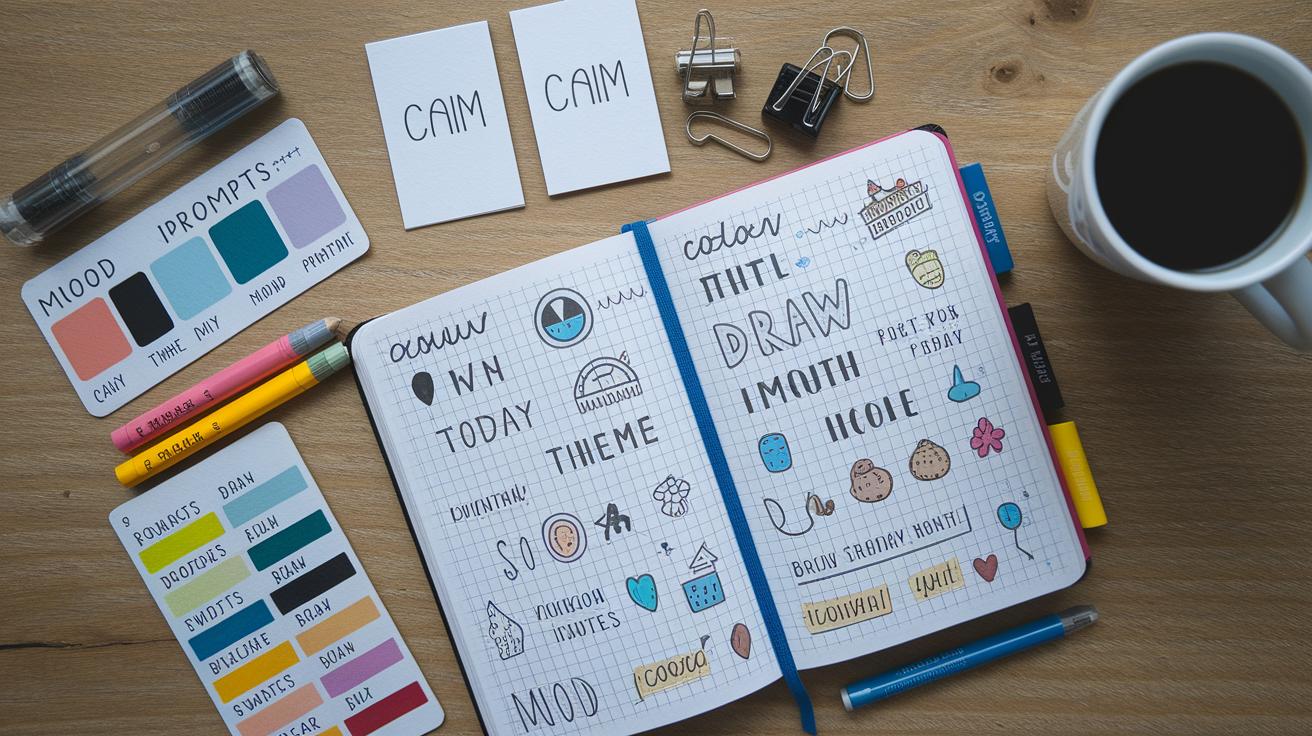
Discover two creative templates that mix art with mindful awareness to make your journaling experience both thoughtful and fun. The first template, called Doodling and Coloring Template, lets you add simple sketches next to brief questions. It invites you to not only write down your thoughts but also to show your feelings with little drawings or splashes of color. Picture a page with blank spots where you can doodle your emotions, guided by prompts like "What color shows your mood today?" or "Draw a symbol of calm." This approach uses both pictures and words to create a vibrant, sensory experience that keeps you connected to the moment.
Monthly Theme Ledger
This template sets up your journal with a different theme for each month. For example, you might focus on mindful spending in January or show some self-compassion in July. It includes a table where you can fill in notes for every theme, along with a spot for a mood icon that you can color. This layout not only gives you a clear structure for the year but also turns each month into a small art project where words and colors reflect your personal growth.
| Month | Theme | Notes | Mood Icon |
|---|---|---|---|
| January | Mindful Spending | ||
| February | Gratitude |
Integrating Your Mindfulness Journal into Daily Routines

Building a mindfulness journal is easier than you might think. It starts with small changes in your everyday routine. Try setting aside a quiet moment in the morning, just before work, to jot down your thoughts. And in the evening, after your meditation, write down how you feel to help you unwind. Adding simple practices like a brief meditation podcast or affirmation cards, and even trying out a few mindful breathing exercises (learn more at https://worthykaws.com?p=1315), can really boost the benefits.
Here are some easy steps to try:
- Set aside 5 minutes in the morning for a quick check-in.
- Use your journal after your evening meditation to cool down.
- Create a weekly reminder for a deeper monthly reflection.
Noticing your progress is as important as starting your routine. Mark your wins in a daily diary or on a calm routine tracker. Every time you add an entry, it’s a small victory, like a step towards feeling less stressed and more balanced. Over time, these little habits can build a clearer mind and a steadier routine.
Top Mindfulness Journal Products and Apps

When picking a mindfulness journal or app, think about a few simple ideas: the style, the number of pages, and the price. Many people love the feel of a printed journal because it offers that hands-on touch that can be very calming. It lets you sit down and really let your thoughts flow without any digital distractions.
Digital apps, however, make it easy to jot down thoughts anywhere you go. They send you reminders and let you update your notes quickly, which can help keep your mindfulness practice steady. No matter if you love the classic feel of a notebook or the smart perks of an app, it's important to check out the design and the cost.
| Product | Format | Price |
|---|---|---|
| Mindful Living Journal | Printed, 144 pp. | <$1/day |
| Guided Self-Care Journal | Printed, 120 pp. | $15 USD |
| Kids’ Mindfulness Journal | Printed, 80 pp. | $12 USD |
| Top Digital App | Mobile/Web | Free + in-app purchases |
When you decide which tool will support your mindfulness practice best, think about what fits your life. Do you like the calming ritual of writing by hand, or do digital reminders match your busy schedule better? If you enjoy clear prompts and guided exercises, the Guided Self-Care Journal might feel just right. Parents and kids can have fun with the Kids’ Mindfulness Journal, which is full of age-friendly activities. For those who want quick access to their notes, a digital app is perfect. Every option has its own charm, so choose the one that feels like a true partner on your mindful journey.
Final Words
In the action, we defined what a mindfulness journal is and highlighted its many benefits. We broke down simple starting steps, weighed your options, and offered creative templates to spark both visual and written reflection.
We also shared mindful writing prompts and practical tips for integrating journaling into a busy routine. With clinical research backing its benefits, a mindfulness journal becomes a reliable tool for steady self-improvement.
Keep making small, positive changes every day; your well-being shines through.
FAQ
What is a mindfulness journal PDF?
A mindfulness journal PDF is a digital version you can download and print that guides you to reflect on your thoughts and feelings, helping boost self-awareness and calm.
What are mindfulness journal prompts?
Mindfulness journal prompts are guiding phrases that encourage you to record current thoughts and emotions, helping you stay focused and present while developing a regular journaling habit.
What is a mindfulness journal template?
A mindfulness journal template provides a pre-structured layout with sections for gratitude, reflection, and mindfulness exercises, making it easier to start and maintain your journaling practice.
What is the impact factor of a mindfulness journal?
The impact factor refers to how effectively mindful journaling improves brain function, emotional balance, and overall well-being, as supported by decades of clinical research.
What does a mindfulness journal for adults offer?
A mindfulness journal for adults offers practical prompts and space to record daily reflections, helping busy individuals manage stress and promote mental clarity.
What does a mindfulness journal article discuss?
A mindfulness journal article discusses the benefits, scientific research, and practical tips for journaling, outlining how mindful writing can improve emotional and mental wellness.
What is considered the best mindfulness journal?
The best mindfulness journal is one that is easy to use, includes effective prompts, and aligns with your wellness goals, making it a helpful tool for reducing stress and enhancing clarity.
Is there a free mindfulness journal PDF available?
Free mindfulness journal PDFs are available online, offering a cost-free way to explore journaling techniques, improve mental health, and support a mindful daily practice.
What should you write in a mindfulness journal?
In a mindfulness journal, you write down present-moment thoughts, feelings, and observations, along with notes on gratitude and reflections to track your emotional changes over time.
What are the 5 R’s of mindfulness?
The 5 R’s of mindfulness include Recognize, Reflect, Respond, Reframe, and Renew, steps that help you notice your experiences and adjust your perspective to maintain inner calm.
What are the 4 P’s of mindfulness?
The 4 P’s in mindfulness encourage you to Pause, Breathe, Observe, and Reflect, guiding you to take a moment, center yourself, and gently return to the present.
What is the 3 2 1 method of journaling?
The 3 2 1 method of journaling involves listing three things you’re grateful for, two things you learned, and one thing you’re excited about, offering a simple format for daily reflection.