
Have you ever felt that working out at home is more challenging than it really is? It doesn’t have to be that way. In this guide, we share easy routines made for beginners who want to feel great without a gym membership. Using only a chair and an optional yoga mat, you’ll try push-ups, planks, and lunges, all at a gentle pace that helps build strength little by little.
Each exercise is a step toward building your confidence and boosting your overall well-being. Ready to see how simple it is to add a dose of fitness to your everyday life? Let’s dive in and start a routine that really fits into your daily schedule.
Essential Full-Body Home Workout Routines for Beginners
This beginner circuit workout uses only a chair and an optional yoga mat. It guides you through eight easy exercises performed one after the other. Take about 20 seconds of rest between each move. When you finish all the exercises, you can take a one-minute break before starting the next round. This routine is perfect if you want to work out without any extra equipment.
Start with push-ups. You can do them the regular way or try a knee-assisted version until you build enough strength for a full push-up. It's a great way to ease into the exercise and build confidence.
Next up are burpees. If they feel too hard, try doing them slowly, and you can even do the push-up part on your knees. This helps you learn the movement without putting too much strain on your joints.
Then do planks. You can choose a high plank or a low plank. As you get stronger, try adding side planks or alternating leg lifts. Keep your back straight and remember to breathe.
Move on to jump lunges. If jumping feels too intense, simply do regular lunges by stepping forward. Keep your knee in line with your ankle for good form.
Now, try dolphin push-ups. If you find the form tricky, stick to regular push-ups until you feel more stable and confident.
After that, do frog squats. Start by squatting low like you would in a goblet squat, then rise into a normal squat. This helps build strength in your legs.
Next are tricep dips using a chair for support. Lower your body slowly to work a full range of motion, and try to keep the movement smooth.
Finish the circuit with a wall sit. Hold it for about a minute to really challenge your legs, or do bodyweight squats if wall sits feel too hard.
For more tips and ideas, check out this related resource: full body strength workout
Structuring Your Home Workout Routine for Beginners
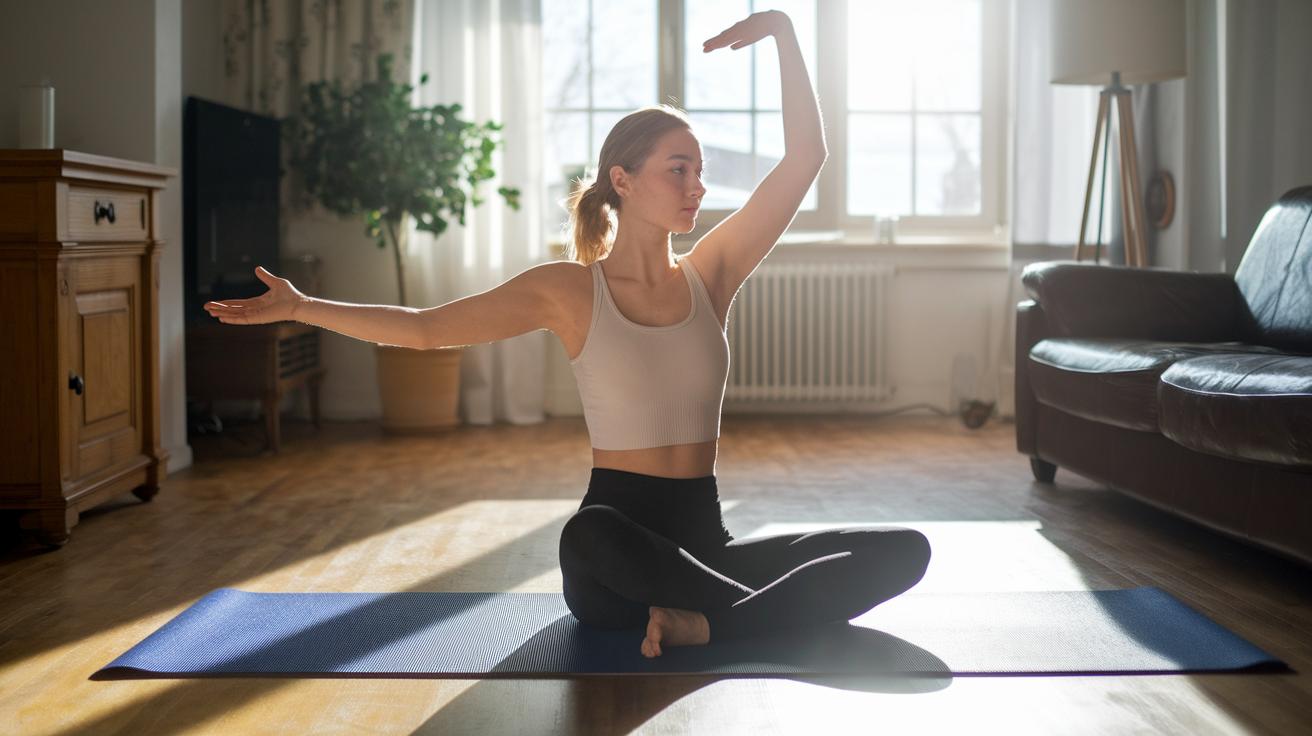
Start your workout with a brief warm-up that gets your muscles moving and your heart pumping. Spend about 5 to 7 minutes doing simple activities to help prevent injuries and get ready for both strength moves and cardio. For instance, do 10 arm circles in each direction to loosen up your shoulders. Then, try 10 leg swings per leg to wake up your lower body. Next, do 15 torso twists to gently activate your core. Follow that with 5 walking lunges on each leg to boost your leg muscles and improve your balance. End your warm-up with 30 seconds of high knees to raise your heart rate for the workout ahead.
After your main workout, cool your body down for around 5 minutes. Cooling down helps your muscles settle and can lessen soreness later. Hold each stretch for about 20 seconds. Try a hamstring stretch for the back of your legs and a quad stretch for the front of your thighs. Add a child's pose to ease any tension in your lower back, and finish with a shoulder stretch. Take a few deep breaths at the end to help your heart rate return to normal. This simple home workout plan offers a clear routine that’s easy to follow for beginners.
Optional Equipment for Home Workout Routines for Beginners
Most home workouts need only a chair and a yoga mat. These simple tools offer enough support and cushion as you move through your exercises. Sometimes, you might crave a bit more of a challenge. In that case, try adding a pair of small dumbbells, around 5 to 10 pounds each.
Dumbbells mix up your routine and boost the exercise challenge. Here are four easy moves to get you going:
- Goblet squat: 10–12 times
- Dumbbell bench press on the floor: 8–10 times
- Bent-over dumbbell row: 10 times each side
- Dumbbell deadlift: 8–12 times
Start with one set and listen to your body. When you feel good, graduate to two sets in your second week. This gentle step-up helps stretch your muscles without overdoing it.
For more tips on proper techniques, check out these related dumbbell routines: https://worthykaws.com?p=73
Keep your movements steady and your breathing smooth. Adjust as needed so every rep feels just right.
Modifications and Progressions in Home Workout Routines for Beginners
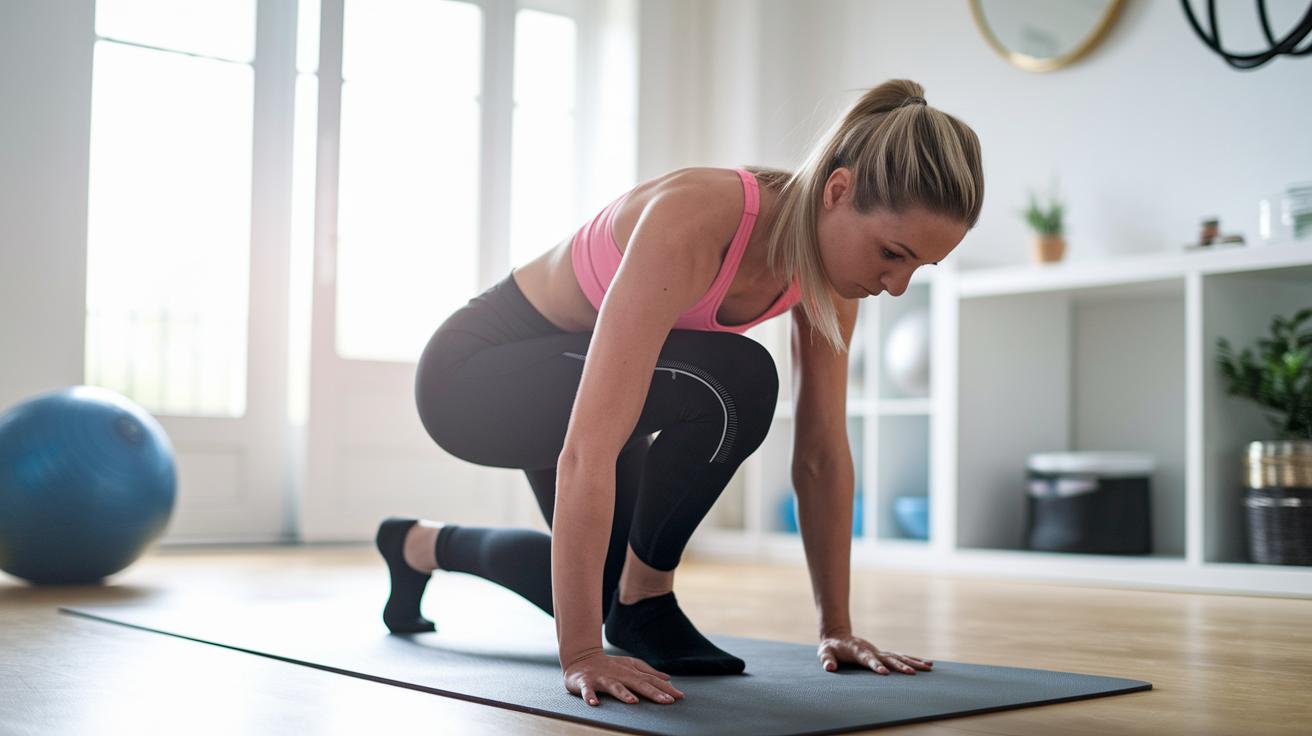
Adjust your push-up form step by step. Start by doing push-ups on your knees, then try slowly lowering yourself into a full push-up, and eventually work your way to a complete push-up. Think of it like stacking small blocks until you build a sturdy wall.
For burpees, simplify the motion by skipping the jump and doing a slow push-up on your knees instead. This gentle change works well with your push-up practice and helps build upper body strength without overloading your joints.
Begin your plank routine with easy moves. Start with a low plank to get comfortable, then move to a high plank. Once you’re ready, add a side plank for about 15 seconds on each side. Later, try alternating leg lifts to boost your balance and core stability.
When practicing lunges, take things slowly. Start with a regular forward lunge, progress to a reverse lunge, and when your form gets strong, challenge yourself with a jump lunge.
Finally, integrate these moves into a simple 4-week plan with wall sits. Hold a wall sit for 30 seconds in the first week, 45 seconds in the second, and 60 seconds in the third. You can also add an extra set each week or increase your reps by two as you grow stronger.
| Push-up | Burpee | Plank | Lunge | Wall Sit |
|---|---|---|---|---|
| Knee-assisted → Slow lowering → Full push-up | No jump; slow push-up on knees | Low → High → Side (15 sec) → Leg lifts | Forward → Reverse → Jump | 30 sec (week 1) → 45 sec (week 2) → 60 sec (week 3) |
Mix these steps with your regular workout routine for a clear, step-by-step plan that grows with you, perfect for beginners and anyone ready to level up their training.
Scheduling Your Beginner Home Workout Routines and Tracking Progress
Try to schedule your home workouts for 2 to 4 days each week. Make sure to rest at least 48 hours between similar workouts so your muscles have time to rebuild properly. Pair your workout with a regular daily habit, maybe right after your morning coffee, to help make exercise a part of your everyday routine.
Consider this simple two-month plan to build up your routine:
- Week 1: Do 1 set of each exercise.
- Week 2: Increase to 2 sets per exercise.
- Week 3: Move on to 3 sets per exercise.
- Week 4: Stick with 3 sets but add 2 extra repetitions for each exercise.
Keep a basic workout log where you write down the date, the exercises you performed, the number of sets, and the reps. It also helps to snap a progress photo every two weeks. Looking back at these photos can remind you of how far you've come.
This step-by-step plan makes it easier to stay motivated while watching your strength grow. Try to set aside the same time for your workouts each day. Building a habit is key. For more ideas on how to weave fitness naturally into your day, check out this guide on living a healthy lifestyle.
Final Words
In the action, this article outlines a complete at-home routine starting with a dynamic warm-up, progressing through a full-body circuit, and including cool-down stretches. It offers clear tips on proper form and safe modifications, guiding you through simple steps with even optional equipment suggestions.
The post also highlights how to track progress and build a daily schedule. With workout routines for beginners at home, every step you take helps secure a healthier and happier you. Enjoy the progress and keep moving forward!
FAQ
What are free, equipment-free full-body workout routines for beginners at home?
The full-body workout routine covers exercises like push-ups, lunges, planks, and squats that don’t require equipment, with easy modifications to build strength safely.
How should a beginner start working out at home?
A beginner should start with a dynamic warm-up, proceed with controlled strength moves, and finish with cool-down stretches, all while keeping a simple workout log to track progress.
What is a good workout schedule for a beginner?
A good schedule involves 2–4 sessions per week with at least 48 hours rest between similar workouts, gradually increasing sets or reps to improve strength over time.
What are the 4 8 12 rule and the 5 4 3 2 1 workout method?
The 4 8 12 rule and the 5 4 3 2 1 method are structured techniques that guide the number of reps or timed intervals to steadily increase exercise intensity, helping beginners progress safely.
Are there workouts specifically for weight loss or for female beginners?
Yes, there are routines focused on weight loss or designed for females that combine full-body moves like lunges, push-ups, and squats with modifications for comfort and safety.
What are some simple exercises to do every day at home?
Daily exercises can include a mix such as push-ups, planks, and lunges, offering a straightforward way to improve strength and endurance without any equipment.
How do forms like street workout, calisthenics, and aerobics fit into a home workout?
These forms involve bodyweight exercises and cardio drills that add variety to your routine, making workouts engaging while boosting overall strength and stamina.
How should I cool down after a home workout?
After your workout, cool down with stretches like hamstring and quad stretches, a gentle child’s pose, shoulder stretches, and deep breathing to relax and restore your muscles.