
Ever wonder if your treadmill could secretly boost your heart health? Treadmill workouts mix quick bursts of speed with easier recovery steps to wake up your muscles and get your heart pumping strong. You start with a short warm-up to get your blood moving, then challenge yourself with fast intervals and a few steep inclines. This routine not only burns calories but also keeps your heart ticking smoothly, making each session a smart way to care for your well-being.
Comprehensive Treadmill Cardio Workouts: Speed, Incline & Timing

Start with a 5-minute warm-up to get your muscles moving and your heart pumping. Try a mix of simple exercises like squats with your feet shoulder-width apart and hands in front of your chest, arm circles while resting your fingertips on your shoulders, a high plank on your forearms, lateral lunges, and a few forward-backward hops.
- Squats
- Arm circles
- High planks
- Lateral lunges
- Forward-backward hops
Next, jump into a 20-minute HIIT treadmill workout. Pick up the pace to around 6 to 8 mph for short, high-intensity bursts, and then slow down slightly for recovery. Use the treadmill’s incline feature by starting low at about 0–2% and gradually raising it up to 12% to add an extra challenge. If you’re new to interval training, take a look at the handy guide on HIIT workouts for more details. For instance, you might run hard for one minute at 6 mph with a 4% incline, then jog for a minute at 4 mph with a 1% incline, and repeat. This mix of speeds and inclines keeps your body guessing and your heart rate steady.
After you finish the HIIT part, cool down for 5 to 10 minutes by walking slowly to help lower your heart rate. It’s also a good idea to spend a few minutes foam rolling your quads, hamstrings, calves, and glutes to ease muscle tightness.
A 30-minute treadmill session like this can burn around 300 to 450 calories. The variation in speed, incline, and intervals makes your workout both fun and effective. The treadmill’s built-in pace tracker lets you easily see your progress and adjust your intensity. Play around with the settings until you find a routine that works for you. Enjoy the workout and keep your heart healthy while having a great cardio session.
Optimal Warm-Up and Cooldown for Treadmill Cardio

When you kick off your treadmill workout, it helps to warm up slowly. Start with squats, they get your big leg muscles moving and push more blood into your lower body. Try doing them slowly so your muscles get a gentle boost and your joints become more flexible. A little pause at the bottom of each squat can make a big difference in your balance.
Then, move on to arm circles. This simple move loosens your shoulders and gets your upper body ready by boosting circulation. Change it up by starting slowly and then picking up the pace for a quick burst. Adding a high plank on your forearms next is a smart idea, too. It strengthens your core and helps protect your back later on. If you feel like switching things up, move between a high and a low plank to engage different muscles.
Lateral lunges paired with forward-backward hops are great for your legs. These moves wake up your muscles evenly. Try adding a gentle twist when you lunge, it mimics the natural turns you might make in sports.
After your workout, cool down with some movement to help your body recover. Instead of just walking, mix in a bit of light jogging for 3 to 5 minutes. This change helps push out lactic acid and gets your muscles ready for foam rolling.
When you foam roll, work on areas like your quads, hamstrings, calves, and glutes. Roll slowly over each spot with gentle pressure, pausing on tender areas. This process eases muscle soreness and boosts blood flow, speeding up recovery.
For more ideas on a good warm-up routine, check out the
warmup routine before workout.
Structured Beginner-to-Advanced Treadmill Cardio Plans
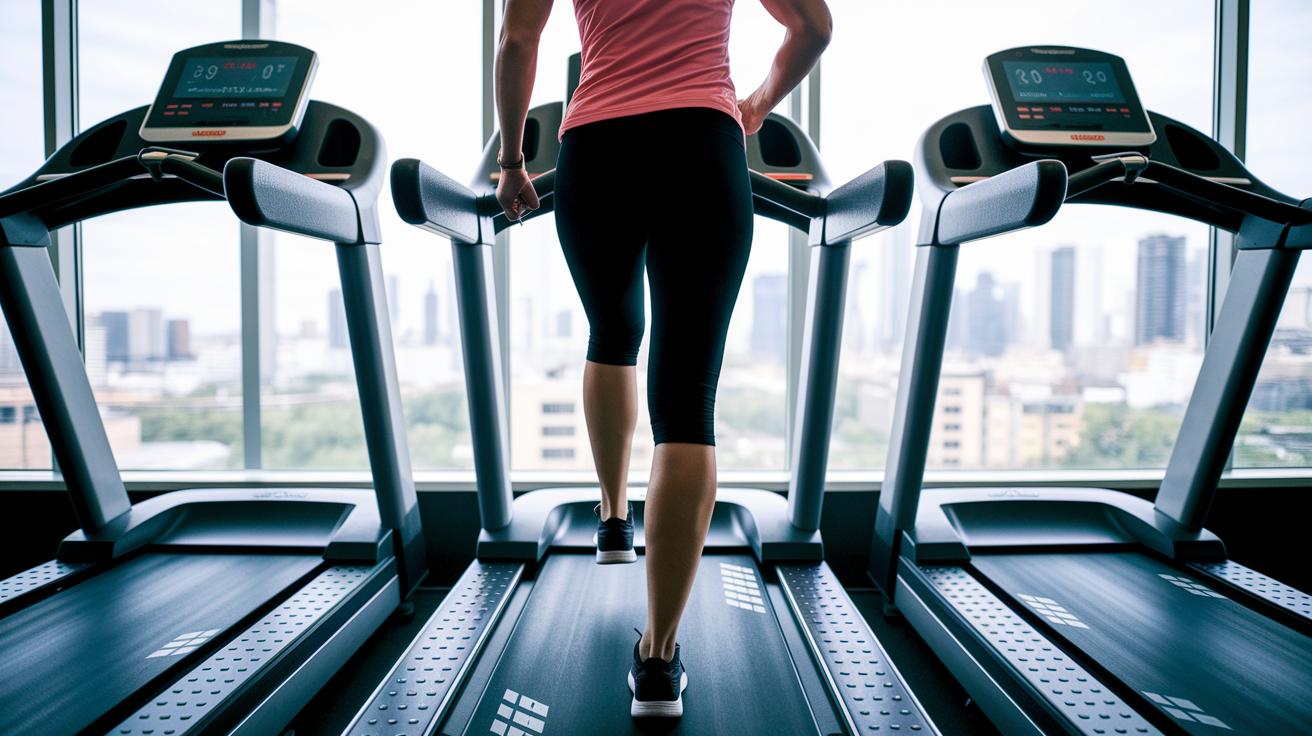
Pick a routine that matches where you’re at with your fitness. If you’re just starting out, try a simple walk with no incline. Walk at a steady pace of 3–4 mph with a slight incline of 0–2% for about 20–30 minutes. Picture a gentle, easy walk that helps you warm up and feel comfortable.
If you're up for a little extra challenge, try adding an incline. Keep your speed at 3–4 mph but set the incline between 1–4%, or even up to 10% if you’re feeling strong. This variation builds your leg strength, almost like hiking up a small hill, while giving your body a nice way to recover.
For an extra push, the 12-3-30 workout is a great option. Walk at 3 mph on a steep 12% incline for 30 minutes to really activate your legs. And if you prefer running, a recovery run at 4–5 mph with a slight 0–2% incline for 15–20 minutes lets your body recover while still burning calories.
If intervals are your style, start with a warm-up, then alternate between 1–2 minutes of running at 6–8 mph and 1 minute of easy jogging for 20 minutes total. For a more advanced move, try a hill session by running at 5–7 mph with a 3–5% incline for 20 minutes. This workout is excellent for boosting both strength and endurance.
| Plan Level | Speed | Incline | Duration |
|---|---|---|---|
| Beginner Walk | 3–4 mph | 0–2% | 20–30 min |
| Intermediate Incline | 3–4 mph | 4–6% | 20–30 min |
| 12-3-30 | 3 mph | 12% | 30 min |
| Recovery Run | 4–5 mph | 0–2% | 15–20 min |
| HIIT Intervals | 6–8 mph | 1–2% | 20 min |
| Hill Session | 5–7 mph | 3–5% | 20 min |
Mix up these workouts to find the right balance of challenge and comfort. Enjoy your treadmill journey and feel great as you build strength and boost your heart health!
Safety, Form, and Heart Rate Guidelines for Treadmill Cardio
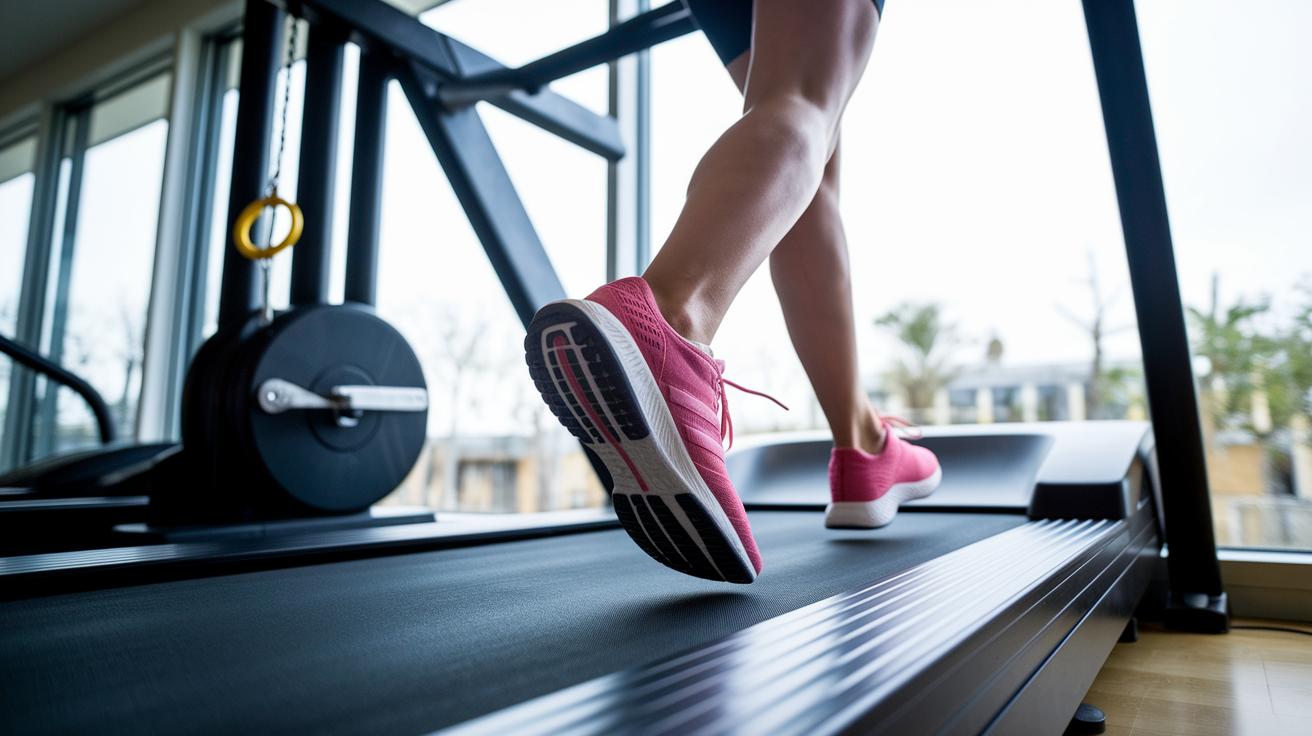
Before you hop on the treadmill, put safety first. Always clip in the safety key, it works like a backup switch to slow or stop the machine if you need it. And be sure to know where the emergency stop is. For instance, if you trip while jogging, knowing how to stop the machine can really help prevent an injury.
It’s also important to wear the right running shoes. A good pair not only protects your feet but also helps soften the impact when your foot strikes the belt. This cushioning effect makes running easier on your knees and shins compared to hard surfaces.
Keep an eye on your form during your workout. Stand tall with a slight lean forward, and try to land on the middle of your foot with each stride. Let your shoulders relax instead of tensing up. Picture a runner gliding easily along a smooth trail, their steps are natural and balanced.
Watching your heart rate is a smart way to manage your workout intensity. Strive for 50–70% of your maximum heart rate for a steady pace. If you’re up for a challenge with short bursts, move into the 70–85% range. Most treadmills show your heart rate, or you can use a chest strap monitor for a clearer read on your endurance.
- Attach safety key
- Know the emergency stop location
- Wear proper running shoes
- Keep an upright posture
- Aim for a mid-foot landing
By following these steps, you can keep your workout both safe and effective, all while taking care of your heart.
treadmill cardio workout: Boost Your Heart Health
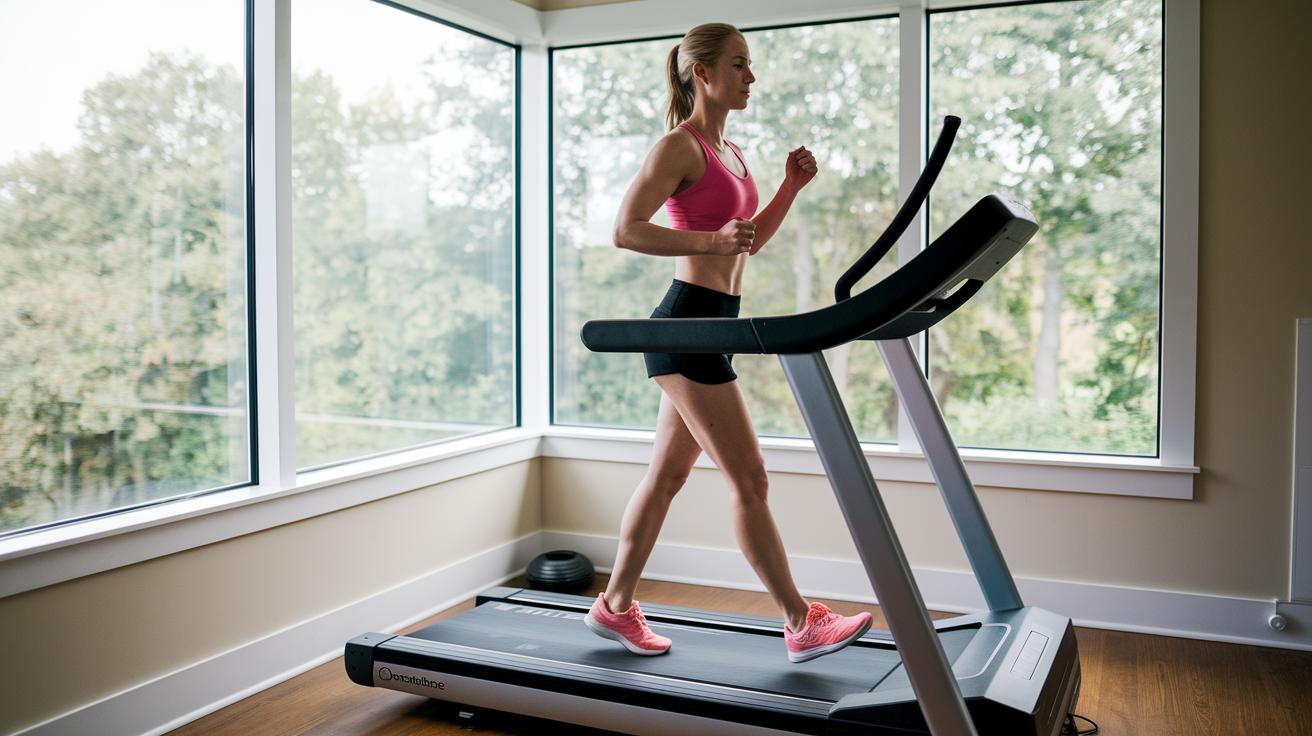
Low-impact treadmill workouts offer a gentle way to boost your heart while keeping your joints safe. If you need an easy start, try walking at a steady pace of 3 to 4 mph with no incline for about 15 to 30 minutes. This way, your heart rate rises slowly, making it a great choice for seniors or anyone easing into exercise.
If you're looking to burn a few extra calories without overdoing it, you might enjoy a fat-burn walk. Walk a bit faster, around 3 to 3.5 mph, and add a slight incline of 1 to 2%. Picture it like gradually filling a glass with water, each step giving you a little extra boost of energy.
For new moms wanting to get moving safely again, short sessions of just 10 to 15 minutes on a low incline can help strengthen your pelvic floor and core. Or, you could try a restorative plan: walk at 2 to 3 mph with a very low incline and slip in a one-minute burst of faster walking, then ease back into your pace. This gentle rhythm helps wake up your muscles without too much stress.
- Gentle walking: 3–4 mph, 0% incline, 15–30 minutes.
- Fat-burn walk: 3–3.5 mph, 1–2% incline.
- Post-pregnancy sessions: 10–15 minutes on a low incline.
- Restorative plan: 2–3 mph with one-minute bursts of faster walking.
Tracking Progress and Maximizing Fat Burn on the Treadmill
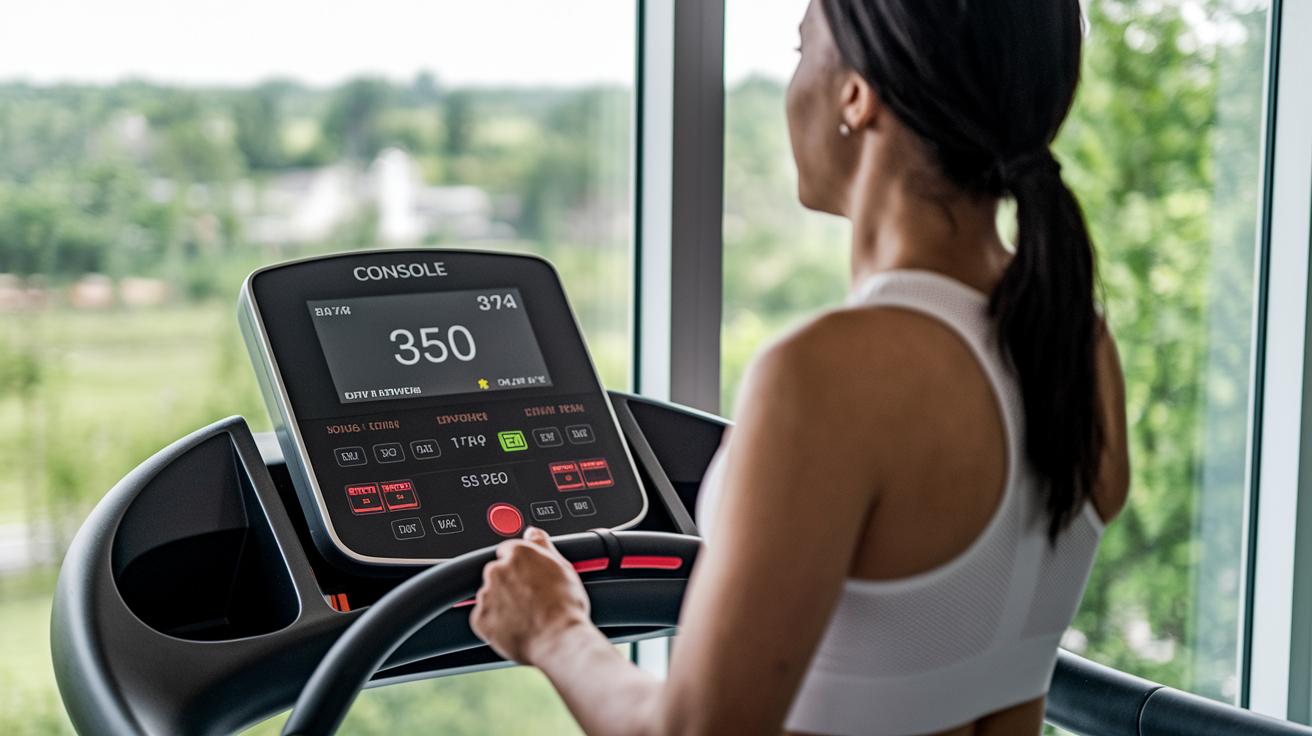
Keep an eye on your treadmill’s console or your trusty fitness tracker to see how many calories you burn, the distance you cover, and your pace. When you notice figures like 300 to 450 calories in just 30 minutes, it’s a clear sign you’re moving in the right direction. Imagine glancing at your stats and thinking, "Wow, 350 calories burned today!" That kind of feedback really lifts your spirits.
Try nudging your workout gradually. Increase your speed by 0.1–0.2 mph or the incline by 0.5% each week. Even small changes can push your body to work harder. For example, shifting the incline from 1–3% to 4–8% can help you enter a more challenging fat-burning zone while keeping your joints safe.
Set a goal each week, like covering a specific distance or burning a certain number of calories. Keeping a simple log, whether in a notebook or on your app, lets you see patterns and celebrate small victories. You might write, "I bumped up my incline today and hit a new calorie record," which makes tracking your progress easy and fun.
Final Words
In the action, this post covered everything from a warm-up routine to a structured beginner-to-advanced session, safety tips, and low-impact modifications. We outlined how adjustable speeds and inclines let you customize your treadmill routines and track progress effectively.
The guide offers clear steps to boost calorie burn and stay safe while enjoying your treadmill cardio workout. Embrace these practical tips with confidence, and keep moving toward a healthier, secure lifestyle.
FAQ
What is a treadmill cardio workout with weights?
The treadmill cardio workout with weights means doing your treadmill session while using light dumbbells or a weighted vest. This combination boosts calorie burn and muscle engagement, making your workout both cardio- and strength-focused.
What are effective treadmill workouts for weight loss and beginners?
The treadmill cardio workout for weight loss and beginners includes routines with set warm-up, HIIT intervals, and cooldowns. It offers adjustable speeds and inclines, making it ideal for home workouts and gradual fitness improvement.
What is the 12-3-30 treadmill workout and does it really work?
The 12-3-30 treadmill workout means walking at 3 mph with a 12% incline for 30 minutes. It works by challenging your leg muscles and boosting calorie burn, making it popular for weight management.
What does a 30-minute fat burning treadmill workout involve?
The 30-minute fat burning treadmill workout typically includes a brisk warm-up, high-intensity intervals with varied speeds and inclines, and a cool down. This routine can help burn between 300 and 450 calories per session.
Is a treadmill a good cardio workout option?
The treadmill is a good cardio workout option because its adjustable settings let you control intensity safely. Its lower-impact design reduces joint stress and caters to both beginners and more advanced users.
Where can I find a downloadable treadmill workout plan PDF?
The downloadable treadmill workout plan PDF offers a clear, tiered routine with speed, incline, and duration guidelines, providing an easy-to-follow roadmap for structured treadmill sessions at home.
How do I perform treadmill workouts safely at home?
The treadmill workout at home means setting up a safe space with proper running shoes, a securely attached safety key, and a planned routine with warm-up, exercise segments, and a cooldown to protect your body during exercise.
How can I monitor my progress during a treadmill workout?
The treadmill cardio session allows you to track metrics like calories burned, distance, and pace via the console or a wearable device. This data helps you adjust intensity and set goals for continuous improvement.